
 Blog
Blog
Dog Training Tips That Build Better Behavior Fast
Great dog training tips do more than teach a dog to sit on command. The best methods create clear communication, better safety, calmer behavior, and a stronger bond between dog and owner. For families dealing with pulling on the leash, barking at the door, jumping on guests, or ignoring recall, small training changes often create the biggest long-term results.
Many dog owners search for shortcuts, but lasting obedience usually comes from consistency, timing, and simple routines. A dog does not need confusing commands or random corrections. A dog needs clarity, repetition, and guidance that makes sense in real life.
- Why Simple Dog Training Tips Work Best
- Start With Structure Before Fixing Behavior
- Use Timing to Reinforce the Right Choice
- Focus on Leash Skills Early
- Train Around Real Distractions
- Reward Calm, Not Just Tricks
- Teach the Owner, Not Just the Dog
- Keep Sessions Short and Productive
- Correct Problems Before They Become Habits
- What Better Training Can Look Like
- Conclusion
Why Simple Dog Training Tips Work Best
Training is most effective when expectations are easy to understand. Dogs learn faster when one behavior is taught at a time, rewards are immediate, and corrections are fair and consistent. Complicated systems often frustrate both the dog and the person holding the leash.
Strong training habits usually come down to a few essentials:
- Clear commands
- Consistent timing
- Calm repetition
- Realistic daily practice
- Follow-through in different environments
When these basics are ignored, even smart dogs become inconsistent. When these basics are used well, progress becomes much easier to see.
Start With Structure Before Fixing Behavior
One of the most overlooked dog training tips is this: behavior problems often improve when daily structure improves first.
A dog with no routine tends to rehearse bad habits. That may look like:
- Pulling during walks
- Jumping when people enter the house
- Barking for attention
- Ignoring commands outdoors
- Becoming overly excited around distractions
Structure creates predictability. Predictability reduces confusion. That is why feeding times, walk times, crate time, place training, and short obedience sessions matter so much.
A dog that knows what to expect each day is often easier to guide, easier to correct, and easier to calm.
Use Timing to Reinforce the Right Choice
Timing can make or break training. A reward given too late may reinforce the wrong action. A correction given too late may confuse the dog. The most effective dog training tips always come back to one key rule: respond in the moment.
For example, if a dog sits, the praise or reward should happen right away. If a dog jumps and then gets attention five seconds later, jumping may still feel rewarding.
Fast timing helps a dog connect action and outcome. That is how learning becomes clear.
Helpful timing reminders
- Mark the correct behavior immediately
- Keep praise calm and specific
- Avoid repeating commands too many times
- Correct only when the dog understands the command
- End on a success whenever possible
Focus on Leash Skills Early
Loose leash walking changes everyday life more than many owners expect. Walks become calmer. Stress drops. Control improves. Public outings feel more enjoyable.
Dogs that drag people down the sidewalk are not usually being stubborn. In many cases, pulling has simply been practiced so often that it feels normal. Training should interrupt that pattern and replace it with a better one.
Useful leash training habits include:
- Starting the walk calmly
- Stopping when pulling begins
- Rewarding position near the handler
- Practicing direction changes
- Avoiding constant tension on the leash
A walk should not feel like a battle. It should feel like leadership, guidance, and shared movement.
Train Around Real Distractions
A dog that listens in the living room but ignores every command outside is not fully trained yet. Real-life obedience requires distractions.
This is where many owners get stuck. Training begins in a quiet space, progress looks great, then everything falls apart at the park, on the sidewalk, or near visitors. That does not mean the dog failed. It means the training needs a gradual increase in difficulty.
A smarter way to build reliability
Start here:
- Quiet room
- Backyard
- Front yard
- Sidewalk
- Public space with controlled distractions
This step-by-step approach builds confidence without overwhelming the dog. Reliable behavior is earned through repetition in different settings, not just inside the house.
Reward Calm, Not Just Tricks
Many owners reward obvious commands like sit, down, and stay. That matters, but calm behavior deserves just as much attention.
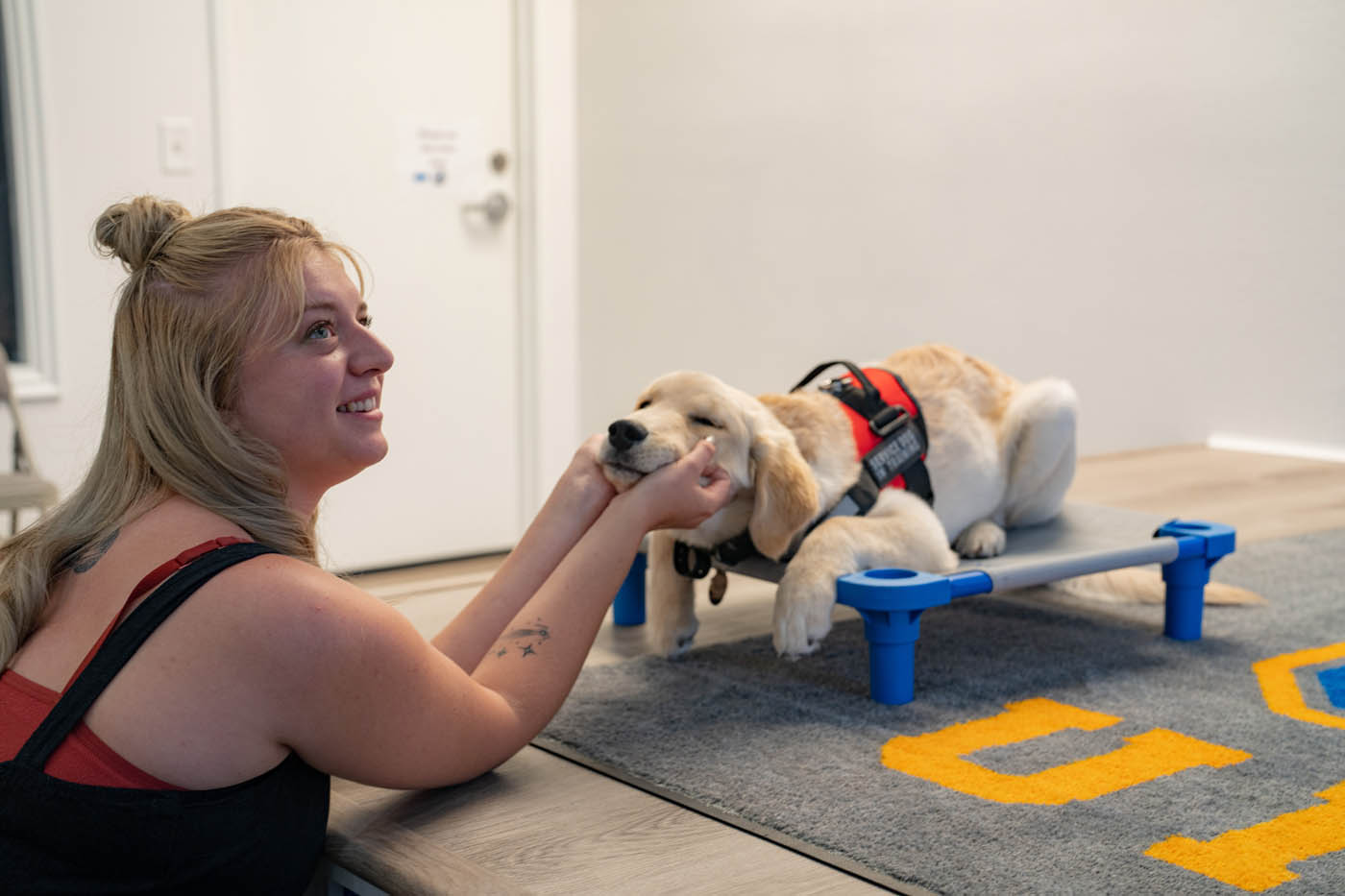
A dog lying quietly on a mat, waiting patiently at the door, or relaxing when guests arrive is showing valuable behavior. That calm state should be reinforced.
This is one of the most practical dog training tips for busy households. Calmness is trainable. A dog can learn that peace, patience, and self-control also lead to good outcomes.
That shift changes the home environment in a big way.
Teach the Owner, Not Just the Dog
One reason professional training gets strong results is that skillful guidance changes human behavior too. Dogs respond to consistency, and consistency starts with the person giving the commands.
Owners often improve results when they learn how to:
- Use fewer words
- Give commands once
- Follow through every time
- Stay calm during mistakes
- Practice in short, focused sessions
Dogs notice patterns fast. Mixed signals slow progress. Clear handling speeds it up.
That is why the best training is not only about obedience drills. It is also about communication, routine, and leadership.
Keep Sessions Short and Productive
Long sessions can drain focus. Short sessions often create better retention.
A few minutes of focused work can be more effective than a 30-minute session filled with repetition and frustration. Dogs, especially puppies and high-energy breeds, often learn best in short blocks.
A productive session usually includes:
- One or two clear goals
- A calm start
- Repetition without overload
- A reward for success
- A positive finish
This helps keep motivation high while preventing burnout.
Correct Problems Before They Become Habits
Bad behavior gets harder to change once it becomes routine. Jumping, leash pulling, door rushing, barking, and ignoring recall often begin as small issues. Over time, repetition turns them into habits.
Early training matters because practice creates permanence. A dog that rehearses unwanted behavior every day becomes better at that behavior every day.
That is why early intervention is powerful. It protects the household from stress and helps the dog succeed faster.
What Better Training Can Look Like
The goal is not a robotic dog. The goal is a dog that can live safely and happily in the real world.
That may include:
- Coming when called
- Walking politely on a leash
- Ignoring distractions
- Greeting people without chaos
- Settling calmly at home
- Responding reliably to direction
These are not just nice extras. These skills improve freedom, safety, and quality of life for both dog and family.
Conclusion
The most effective dog training tips are usually the simplest ones. Be clear. Be consistent. Reward the right behavior at the right time. Practice in real environments. Build structure before expecting reliability.
Better behavior does not come from luck. It comes from calm repetition, smart guidance, and a training approach that makes sense in everyday life. When the process is clear, dogs learn faster, owners feel more confident, and daily life becomes much more enjoyable.
Rob’s Dogs serves Phoenix and Scottsdale with board-and-train programs, private lessons, puppy training classes, and behavioral assessments, with a focus on helping dogs behave, be safe, and be happy.
If you want, I can also turn this into a cleaner guest-post-ready version with meta title, meta description, and author bio.