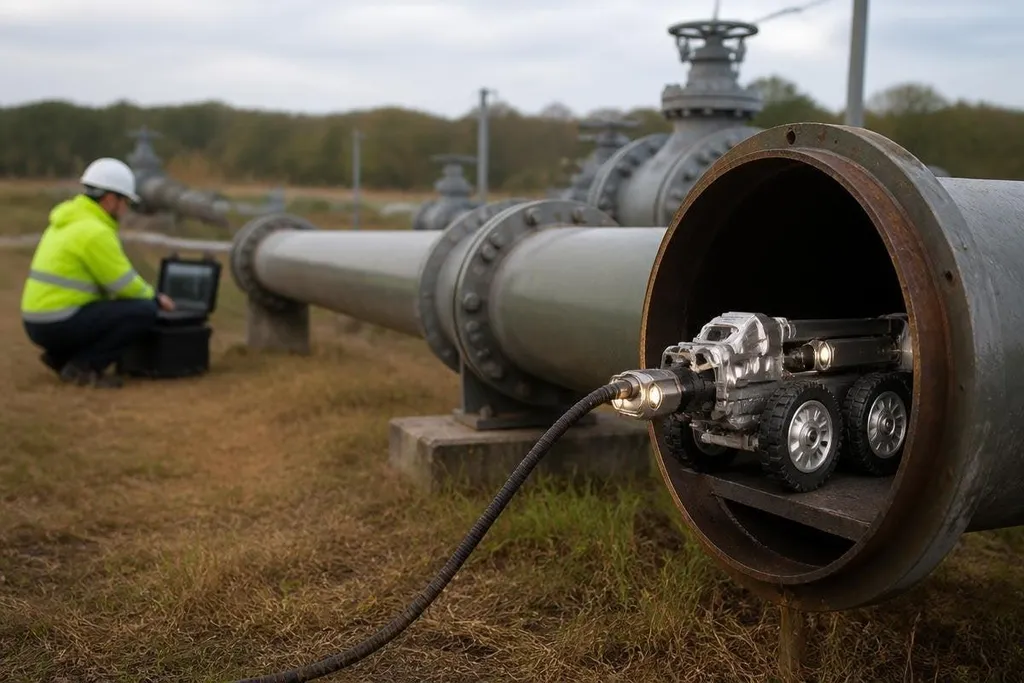
A pipeline robot can inspect the inside of a pipe while the line is shut down, or travel outside it while the line keeps running. That matters because a small crack can grow between scheduled checks, and a robot can give operators earlier evidence than a visual inspection from above ground.
Quick read
- Internal robots use cameras and sensors to check pipe walls, welds, joints, and deposits.
- External robots can inspect exposed pipe without sending equipment through the line.
- A robot can find warning signs, but people still need to confirm the leak and fix the pipe.
What pipeline robots look for
A pipe-crawling robot moves through the line on wheels, tracks, or a tether. Its camera gives the operator a view of the pipe wall, while other sensors can look for changes in wall thickness, cracks, corrosion, or unusual deposits.
The robot does more than record video. A camera may show a visible split, but a thickness sensor can point to metal loss before the damage opens into a leak. That distinction gives a maintenance team a chance to inspect the area and plan a repair.
Some robots use magnetic methods to check steel pipe for signs of corrosion below the surface. Others use ultrasound to measure the wall. The right sensor depends on the pipe material, its diameter, the fluid inside, and the type of damage the operator expects.
Its software can also map where each finding sits along the pipe. That location data helps a crew return to the same weld, bend, or joint instead of searching along the whole line.
How early detection reduces risk
Leak prevention starts with finding damage before pressure turns it into a release. Inspection alone can't stop corrosion, but its record can help an operator rank repairs and remove damaged sections from service.
The timing matters. If an internal robot finds a thinning section during a planned inspection, the operator can compare that result with older records and check whether the damage is growing. A repeated measurement is more useful than a single image because it shows change over time.
External robots help where sending equipment through the pipe is difficult. A tracked robot can inspect exposed sections, storage areas, and pipe supports with cameras or sensors.
An aerial robot can check long stretches from above, but its view may miss damage hidden under insulation, paint, soil, or standing water.
That limit is easy to miss in a polished demonstration. I'd treat any robot inspection as an early warning system, not as a repair plan.
Where the robot still needs help
A robot needs access, power, and a route it can handle. Bends, valves, changes in pipe size, blocked sections, and heavy deposits can stop an internal robot or leave part of the pipe unchecked.
The inspection result also depends on the sensor and the operator who reads it. A camera image may show a mark without proving its depth. A thickness reading can point to metal loss without explaining its cause. People may need a second inspection method before deciding whether to repair, replace, or keep watching the section.
Leak detection has a similar limit. A gas sensor may find a concentration change near a suspected leak, but airflow can move the gas away from its source. A pressure change can support the finding, yet it may have another cause. Several pieces of evidence need to agree before a crew closes a line or starts work.
A pipeline inspection claim needs more than a leak alert. The report should name the robot, sensor, pipe section, test date, and measured result. Reporting from Robot24 can give operators those details to check before a machine enters the line.
What operators should check before use
A pipeline team can keep a robot inspection focused by checking these points before the machine enters the work area:
- Define the target: choose corrosion, cracks, leaks, blocked sections, or another specific fault.
- Match the sensor: confirm that the camera, magnetic tool, ultrasound system, or gas sensor can detect that fault on this pipe.
- Map the route: record bends, valves, diameter changes, access points, and sections the robot cannot reach.
- Set a response: decide who reviews a finding and how quickly the area gets a second check.
- Keep the record: save the location, sensor result, image, and repair decision for the next inspection.
What happens after the scan
The robot's report should lead to a human inspection, not sit in a database. A crew may use a second sensor, expose a buried section, test the pressure, or take the pipe out of service before repair.
The value of the robot grows when operators compare each scan with earlier records. That turns inspection into a record of pipe condition, where a change in one section can guide the next visit.
Pipeline robots can reduce the time between damage and action, but they cannot promise that every leak will be found. The deciding question is whether the inspection program gives each warning a clear owner, a follow-up check, and a repair date.